

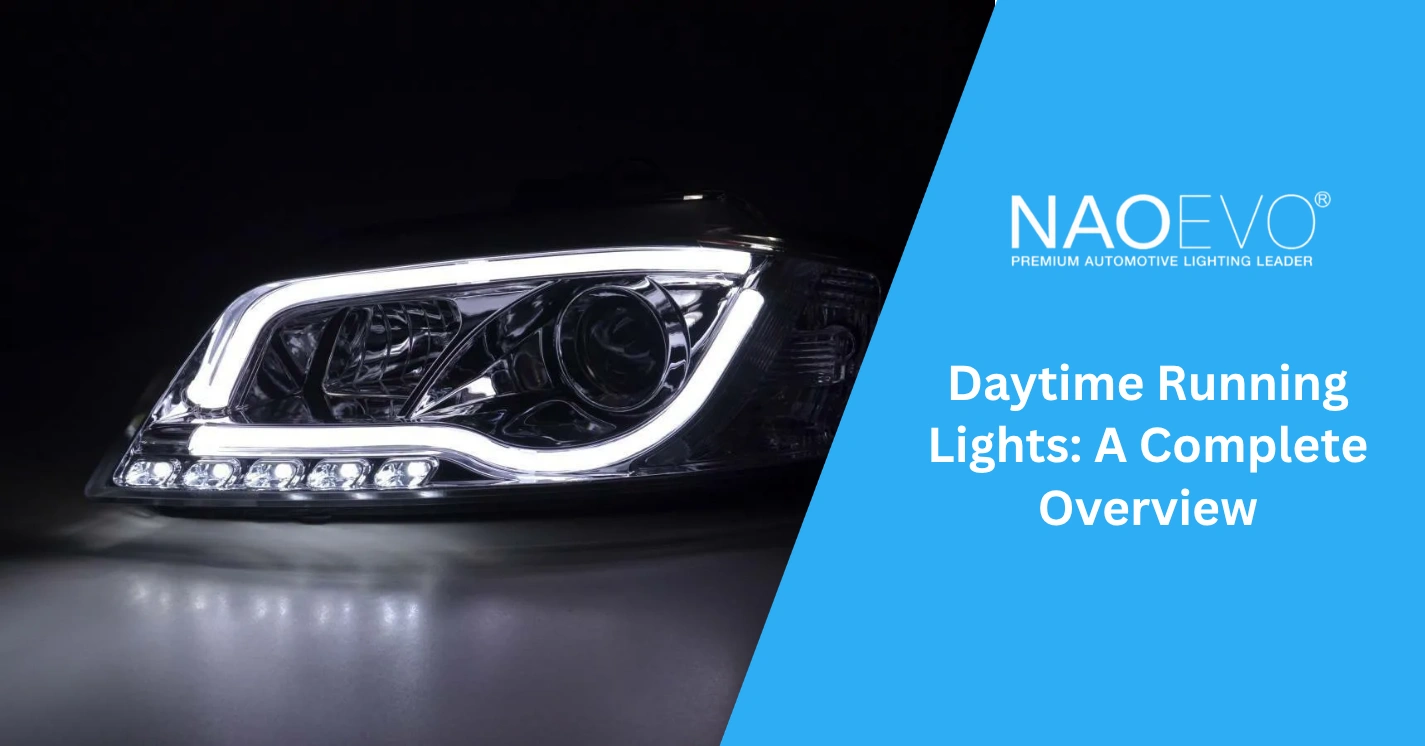
¿Qué significa «luces de circulación diurna»?
DRL son las siglas de «Daytime Running Light» (luces de circulación diurna). Se trata de una luz instalada en la parte delantera del vehículo que permanece encendida automáticamente durante el día para Haz que tu coche sea más visible para los demás usuarios de la vía pública.
A diferencia de faros, Las luces de circulación diurna (DRL) no están diseñadas para iluminar la carretera. Su objetivo principal es ayudar a otros conductores, ciclistas y peatones a ver tu vehículo con mayor facilidad durante el día, mejorando así la seguridad vial.
Características principales de las luces de circulación diurna

Alta visibilidad:
Unas tiras luminosas exclusivas permiten que la silueta del coche se vea claramente, incluso con una fuerte luz de fondo.
Temperatura de color:
La luz blanca fría de 5000 K a 6000 K atraviesa fácilmente la niebla espesa y la bruma.
Ahorro energético:
Consume solo 15% de la potencia estándar de un faro: funciona durante 30 horas seguidas con tan solo 1 kWh de electricidad.
Regulación inteligente de la intensidad luminosa:
Se atenúa automáticamente al encender los faros para evitar deslumbrar a los conductores que vienen en sentido contrario.
Cómo funciona el DRL y sus casos de uso

El principio de funcionamiento de las luces de circulación diurna (DRL) es, en realidad, muy sencillo: cuando se arranca el vehículo y está en marcha adelante, las luces de circulación diurna se encienden automáticamente.
Al poner la marcha atrás o encender los faros, las luces de circulación diurna (DRL) se apagan automáticamente. Este diseño inteligente te ofrece mayor seguridad durante el día y evita el derroche de energía.
En la conducción real, las luces diurnas resultan especialmente útiles en condiciones de baja visibilidad: lluvia, nubes, niebla, túneles y al amanecer o al atardecer.
Según la NHTSA, las luces diurnas (DRL) contribuyen a reducir los accidentes diurnos en los que se ven implicados varios vehículos, tanto turismos como furgonetas ligeras. Pueden reducir los accidentes diurnos entre vehículos que circulan en sentido contrario el número de víctimas mortales en hasta un 5%.
Ventajas de utilizar las luces de circulación diurna
1. Ventajas en materia de seguridad
Se ha demostrado que las luces diurnas (DRL) reducen significativamente el número de colisiones durante el día, al hacer que los vehículos sean más visibles para el resto de usuarios de la vía pública. Los datos de NHTSA muestra que las luces de circulación diurna (DRL) reducen los accidentes diurnos en los que se ven implicados varios vehículos en un 5–12%, y algunos estudios presentan cifras aún más impresionantes.
2. Repercusión estética y de diseño
Las luces diurnas (DRL) se han convertido en uno de los elementos de diseño más destacados de los vehículos modernos. Lo que comenzó como una característica de seguridad es ahora una herramienta de diseño clave que define el «rostro» y el carácter visual de un coche.
Hyundai Motor Group afirma que las luces de conducción diurna (DRL) se han convertido en «elementos esenciales del diseño «que determinan la imagen que transmite un vehículo», y señalan que «se han convertido en un elemento que simboliza una marca o un modelo».
3. Identidad y reconocimiento de marca
Las luces diurnas (DRL) se han convertido en una potente herramienta de imagen de marca. Los fabricantes de automóviles utilizan diseños exclusivos de luces diurnas para que sus vehículos sean reconocibles al instante, a menudo sin necesidad de ver el emblema.
Tomemos como ejemplo a BMW: sus dos anillos circulares de LED que rodean cada faro son conocidos popularmente como «Angel Eyes». Volvo ha adoptado unas distintivas luces diurnas con forma de «T» horizontal, apodadas «el martillo de Thor».
Esta tendencia ha convertido a las luces diurnas («DRL») en «para los coches, lo que son las joyas para las chicas«—un accesorio característico que distingue a una marca—»
Breve historia de las luces de circulación diurna


[Las primeras luces diurnas (DRL) eran pequeñas luces rectangulares independientes que se montaban debajo de los faros o en los parachoques]
Las luces de circulación diurna se remontan a Europa del Norte En la década de los 70, los largos y oscuros inviernos, junto con las fuertes nevadas y la niebla, llevaron a los gobiernos a exigir su instalación en los coches nuevos. Las primeras versiones utilizaban bombillas halógenas, que consumían mucha energía, tenían una vida útil corta y no resultaban muy atractivas; algunos fabricantes de automóviles se limitaban a utilizar las luces de cruce o a atenuar las de carretera para ahorrar costes.
El verdadero punto de inflexión se produjo en 2011, cuando la UE hizo obligatorias las luces de circulación diurna (DRL) en todos los vehículos nuevos, basándose en datos que demostraban que estas luces reducían significativamente los accidentes: en un 12,41 TP3T en los incidentes de tráfico y en un 26,41 TP3T en los accidentes mortales.
Pero fue Audi quien popularizó las luces diurnas. Tras introducir la tecnología LED en el A8 En 2004, sus llamativos diseños en los modelos R8 y A4 convirtieron las luces diurnas (DRL) en un icono de estilo. Los LED ofrecían ventajas clave: un tamaño más reducido, formas flexibles, un menor consumo energético y una vida útil más larga.
Hoy en día, las luces diurnas (DRL) han pasado de ser un elemento exclusivo de los coches de lujo a convertirse en una característica habitual en los modelos más comunes, y aún quedan por llegar más innovaciones.
Luces DRL frente a faros: ¿cuál es la diferencia?

Características | DRL | Faro |
|---|---|---|
Objetivo principal | Haz que tu coche sea visible para los demás | Ilumina el camino que tienes por delante por la noche |
Cuándo se utiliza | Se enciende automáticamente durante el día | Se enciende de forma manual o automática por la noche |
Luminosidad | Brillo bajo a medio | Alto brillo |
Dirección de iluminación | Visibilidad frontal para que los demás te vean | Iluminación vial para mejorar la visibilidad del conductor |
Consumo energético | Bajo | Alta |
Tipo de luz habitual | Tira de LED o LED de bajo consumo | Halógenas / LED / HID / Láser |
En pocas palabras, las luces de circulación diurna (DRL) están diseñadas para su uso durante el día; hacen que tu coche sea más visible para los demás, pero no iluminan la carretera.
Los faros delanteros se utilizan por la noche o en condiciones de baja visibilidad, y proporcionan haces de luz brillantes y concentrados para iluminar el camino. Las luces diurnas (DRL) son automáticas y de baja intensidad; los faros delanteros son manuales y de alta intensidad.
Más información: Luces de día frente a faros, ¿qué?'¿Cuál es la diferencia?
Luces DRL frente a luces antiniebla: ¿cuál es la diferencia?

Características | DRL | Faros antiniebla |
|---|---|---|
Función | Mejora la visibilidad durante el día | Iluminación de la calzada para condiciones de niebla o lluvia |
Activación | Auto | Manual |
Color | 5500–6500 K | 2000–3000 K |
Distancia de penetración | unos 50 metros | 100-200 metros |
Potencia | 5–10 W | 35–55 W |
Posición | Zona superior del faro | Parachoques inferior |
Después de más de una década al volante, me he dado cuenta de que mucha gente confunde las luces de circulación diurna (DRL) con las luces antiniebla, sobre todo cuando llueve o hay niebla. Hoy vamos a comparar ambas.
Las luces diurnas (DRL) blancas se encienden automáticamente al arrancar el motor para garantizar la visibilidad durante el día. Las luces antiniebla son manuales, están situadas en la parte inferior del vehículo y emiten una luz amarilla que proporciona una iluminación de gran penetración en caso de lluvia o niebla.
Más información: Luces de circulación diurna (DRL) frente a luces antiniebla: ¿cuál es la diferencia?
Luces de circulación diurna (DRL): Legislación y normativa internacional
La normativa sobre luces de circulación diurna varía de un país a otro. Los países escandinavos fueron los primeros en hacer obligatorio el uso de las luces de circulación diurna (DRL) debido a las condiciones invernales de oscuridad persistente. Posteriormente, la UE tomó medidas con Directiva 2008/89/CE, por lo que todos los turismos nuevos deberán estar equipados con luces de circulación diurna (DRL) a partir de febrero de 2011. Los estudios demuestran que las luces de circulación diurna aumentan considerablemente la visibilidad de los vehículos, lo que contribuye a mejorar la seguridad vial.
¿En qué lugares son obligatorias las luces de circulación diurna (DRL)?
- Suecia promulgó en 1977 una ley que obligaba a todos los coches nuevos a ir equipados con luces de circulación diurna.
- En 1972, Finlandia estableció la obligatoriedad de las luces diurnas (DRL) en las carreteras rurales durante el invierno, y no fue hasta 1997 cuando amplió esta obligación a todas las carreteras durante todo el año.
- Noruega siguió sus pasos en 1986, Islandia en 1988 y Dinamarca en 1990. Canadá exige la instalación de luces de conducción diurna (DRL) en los coches nuevos desde 1989.
- Aunque el Reino Unido tardó más en adoptar las luces de circulación diurna (DRL), estas pasaron a ser obligatorias en los vehículos nuevos en 2011.
Normas técnicas de DRL
UE (Unión Europea)
Reglamento n.º 87 de la CEPE de las Naciones Unidas Es la norma de certificación obligatoria de la UE y los países nórdicos para las luces de circulación diurna (DRL), que establece requisitos uniformes en cuanto a luminosidad, color y funcionamiento automático con el fin de mejorar la visibilidad del vehículo y evitar el deslumbramiento.
- Intensidad luminosa: entre 400 cd (mínimo) y 1.200 cd (máximo)
- Temperatura de color: La luz emitida debe ser estrictamente blanca.
- Superficie aparente: La superficie aparente de la luz diurna (DRL) en la dirección del eje de referencia debe estar comprendida entre 25 cm² y 200 cm².
- Norma de activación: Se enciende automáticamente al arrancar el motor; queda prohibida la desactivación manual.
- Requisito de atenuación: el brillo tras la atenuación debe ser ≤501 TP3T de la intensidad inicial o ≤200 cd.
América del Norte
La norma SAE J2087 / FMVSS 108 es el marco normativo norteamericano sobre luces de circulación diurna (DRL), que define las normas de rendimiento, color y control para los vehículos de EE. UU. y Canadá. Se diferencia notablemente del Reglamento n.º 87 de la CEPE de las Naciones Unidas por sus límites de luminosidad más elevados y por permitir el color ámbar.
- Intensidad luminosa: entre 400 cd y 1.500 cd
- Color: blanco, amarillo o entre blanco y amarillo
- Regla de activación: encendido automático tras el arranque, Se permite el cierre manual
- Requisitos de atenuación: Luces de circulación diurna (DRL) dentro de 100 mm Las luces de intermitencia deben apagarse por completo cuando se activan los intermitentes.
Tipos de luces de circulación diurna
Las luces de circulación diurna (DRL) pueden ser de varios tipos, clasificadas según su fuente de luz, su función y su diseño. En esta guía, nos centraremos en los diferentes tipos de DRL según su diseño exterior, para ayudarte a conocer los estilos más habituales que se encuentran en los vehículos modernos.
1. Tipo de cadena luminosa (estilo Matrix)

Perlas LED independientes dispuestas en línea o en forma de matriz, que muestran puntos de luz individuales visibles. Las clásicas luces de circulación diurna con forma de «ojo de lágrima» de los primeros modelos del Audi A4 son un ejemplo perfecto de este diseño discreto de perlas LED.
Pros:
Estructura sencilla y coste relativamente bajo.
Contras:
Efecto de puntos visibles, carece del aspecto de alta tecnología de los diseños con tiras luminosas y presenta una uniformidad de brillo ligeramente inferior.
2. Tipo de guía de luz (fibra óptica / tira luminosa)

Una franja luminosa continua y uniforme, sin espacios visibles, que ofrece un aspecto elegante y de alta gama. Por ejemplo, las «Angel Eyes» de BMW, el diseño «LED Extreme» de Audi y las modernas luces diurnas (DRL) de Mercedes-Benz.
Pros:
- Emisión de luz suave y uniforme
- Aspecto elegante y de alta tecnología
- Gran reconocimiento de marca y atractivo visual
Contras:
- Su coste es superior al del tipo de cuentas ligeras
- Requiere una ingeniería óptica más compleja
3. Tipo de matriz (matriz LED digital)
Múltiples módulos LED controlados de forma independiente que permiten crear efectos de iluminación dinámicos, secuencias animadas y patrones adaptativos.
Estas luces diurnas (DRL) ofrecen un rendimiento lumínico de primera calidad y funciones inteligentes, pero también conllevan unos costes más elevados y una tecnología más compleja.
● Audi A6 Avant
El Audi A6 cuenta con 48 módulos LED controlados individualmente por faro, que permiten ofrecer 7 patrones de iluminación digital dinámicos con una iluminación uniforme y un control preciso del deslumbramiento.

● Audi Q5L
El Audi Q5L cuenta con segmentos LED controlados de forma independiente, intermitentes dinámicos e iluminación de bienvenida. Las luces largas adaptativas reducen automáticamente el deslumbramiento para los conductores que vienen en sentido contrario, al tiempo que mantienen una excelente visibilidad de la carretera.

● Mercedes-Benz Digital Light
Incorpora una matriz de micro-LED de densidad ultraalta con hasta 25 000 micro-LED por faro, lo que permite un control ultrapreciso del haz de luz y la proyección de elementos en la calzada, como pasos de peatones, flechas direccionales y símbolos de advertencia.

4. Tipo de contorno (forma de C / forma de L / anillo)

Las luces diurnas (DRL) de estilo contorneado siguen el contorno del faro, creando formas como la C, la L, la U o anillos completos. Un ejemplo famoso es la luz diurna en forma de C de Volvo, conocida como «el martillo de Thor», que destaca por su tira luminosa continua y su gran visibilidad durante el día.
Pros:
- Una identidad de marca muy reconocible
- Un lenguaje de diseño flexible en los distintos modelos
- Se puede adaptar a faros de distintas formas y tamaños
Contras:
- Se está volviendo muy habitual, aunque se utiliza en exceso
- Requiere un lenguaje de diseño contundente para destacar frente a la competencia
5. Formas personalizadas

Los diseños exclusivos de las luces diurnas (DRL) rompen con las formas tradicionales e incluyen diseños de tipo dividido, barras luminosas que ocupan todo el ancho, elementos verticales e iluminación de estilo pixelado.
Por ejemplo, el Lynk & Co 03 presenta un diseño característico de luces diurnas divididas, con una delgada banda luminosa situada bajo la línea del capó y separada del faro principal, lo que le confiere un aspecto marcante y muy reconocible.
Pros:
- Aspecto muy característico y futurista
- Fuerte diferenciación de marca
- Crea una firma única que destaca frente a los diseños tradicionales
Contras:
- Puede que no sea del agrado de todos los consumidores
- Puede resultar más complicado integrarlo con los requisitos aerodinámicos y de refrigeración
- Mayor complejidad en el diseño y la ingeniería
¿Cómo se desactivan las luces de circulación diurna?

El procedimiento para desactivar las luces de circulación diurna varía en función del fabricante y el modelo del vehículo.
Por ejemplo, en muchos Vehículos alemanes, puedes desactivar las luces de circulación diurna (DRL) a través del sistema de infoentretenimiento: para ello, ve a «Ajustes del vehículo» o «Ajustes de iluminación» y desactiva la opción de luces de circulación diurna.
En algunos Vehículos japoneses, se puede acceder a este ajuste utilizando los botones de control del volante para entrar en el menú de ajustes del vehículo.
Sin embargo, es importante tener en cuenta que, por motivos de seguridad, en algunos vehículos no es posible desactivar manualmente las luces de circulación diurna (DRL). En otros, es posible desactivarlas únicamente en determinadas condiciones, como cuando el vehículo está aparcado.
⚠️Aspectos que debes tener en cuenta antes de apagar las luces de circulación diurna (DRL):
En muchos países y regiones, la ley exige que las luces de circulación diurna (DRL) permanezcan encendidas mientras se conduce. Desactivarlas podría suponer una infracción de la normativa de tráfico local. Y lo que es más importante, apagar las luces de circulación diurna puede reducir la visibilidad de tu vehículo para el resto de usuarios de la vía pública, especialmente durante las horas diurnas, lo que aumenta el riesgo de accidentes.
Antes de decidir apagar las luces de circulación diurna (DRL), comprueba siempre la normativa de tráfico local y consulta el manual del propietario de tu vehículo para asegurarte de que hacerlo es legal y seguro.
¿No estás seguro de si desactivar las luces de circulación diurna (DRL) es ilegal en tu lugar de residencia? Compruébalo este recurso para averiguarlo.
¿Cómo se cambian las luces de circulación diurna?
La dificultad para sustituir las luces de circulación diurna (DRL) de tu vehículo depende en gran medida de la marca y el modelo de tu coche. A continuación se indican los tres métodos de sustitución más habituales.
1. Cambiar la bombilla de las luces de circulación diurna (DRL)

Ideal para:
Vehículos con una bombilla de luces diurnas (DRL) independiente y sustituible
Se puede acceder a la bombilla desde detrás del faro o desde el interior del compartimento del motor
Pasos:
- Abre el capó.
- Localiza el casquillo de la bombilla de las luces de circulación diurna (DRL).
- Gira el casquillo en sentido antihorario y retira la bombilla vieja.
- Instala la nueva bombilla y fíjala en su sitio.
2. Sustituye la tira de LED o la barra luminosa de las luces diurnas (DRL)

Ideal para:
Vehículos que utilizan una tira de LED o una barra de luces LED como luces de circulación diurna (DRL)
La tira de LED está estropeada, parpadea, se ha amarilleado o no funciona en parte
Pasos:
Si se trata de una tira de LED externa:
- Retira la tira de LED antigua.
- Limpia la superficie de montaje.
- Instala la nueva tira.
- Conecta el cableado a la fuente de alimentación ACC o al cable de control de las luces de circulación diurna (DRL).
Si se trata de una tira de LED interna:
- Desmonta el conjunto del faro.
- Calienta la carcasa del faro para ablandar el sellador.
- Abre la carcasa y retira la tira de LED antigua.
- Instala la nueva tira.
- Vuelve a sellar el faro para evitar que entre agua y polvo.
Consejo: Asegúrate de que todas las conexiones del cableado estén correctamente aisladas y sean estancas.
3. Sustituye el conjunto completo del faro

Ideal para:
Vehículos con luces de circulación diurna (DRL) integradas que no se pueden sustituir por separado
Un módulo de luces diurnas (DRL) o un conjunto de faros dañado
Pasos:
- Abre el capó.
- Retira el parachoques delantero quitando los tornillos y los clips.
- Retira con cuidado el parachoques, procurando no dañar el cableado de las luces antiniebla.
- Retira los tornillos de fijación del faro y desconecta todos los conectores eléctricos.
- Instala el nuevo conjunto de faro y vuelve a conectar el cableado.
- Vuelve a montar el parachoques.
- Ajusta la alineación de los faros y comprueba que las luces de circulación diurna funcionan correctamente.
La solución 2 en 1 de luces de día y luces de carretera que necesitas

|
Potencia de las luces largas |
45 W, 4500 lm por bombilla |
|
Potencia DRL |
20 W, 2100 lm por bombilla |
|
Tipo de chip |
12 unidades de chips flip-chip de 45 MIL |
|
Instalación |
Plug-n-Play |
|
Garantía |
1 año |
La H15 es una bombilla de doble función que sirve tanto de luz de circulación diurna como de luz de carretera en una sola unidad. Se utiliza habitualmente en coches europeos, sobre todo en modelos de Volkswagen, Audi, Mercedes-Benz y algunos modelos de Ford.
Si quieres cambiar tus luces diurnas halógenas H15 por unas LED más brillantes y eficientes, elige Bombilla LED para faro NAOEVO H15D
¿Qué hace que el NAOEVO H15D destaque?
💡 Diseño H15 1:1 auténtico, se conecta directamente y funciona como la bombilla original
💡 45 W y 4.500 lm por bombilla, luminosidad moderada, sin deslumbramiento intenso
💡 Función de luces de día (DRL) + luces largas; las luces de día se atenúan automáticamente cuando se encienden los faros por la noche.
💡 CANBUS lineal, compatible con los modelos 99%, con menos códigos de error.
Preguntas frecuentes:
¿Puedo cambiar solo una bombilla de las luces diurnas?
Sí, pero se recomienda cambiarlas por parejas para que el brillo y el color sean uniformes.
¿Puedo instalar luces diurnas (DRL) de recambio en mi coche?
La respuesta corta es sí, pero depende de dónde vivas y del tipo de luces de circulación diurna (DRL) que vayas a instalar. Las leyes y los requisitos varían considerablemente, por lo que siempre es recomendable consultar primero la normativa de tráfico local.
¿Es ilegal desactivar las luces de circulación diurna?
En muchos países (la UE, Canadá, los países nórdicos), sí. Consulta la normativa de tráfico de tu país.
¿Todos los coches nuevos tienen luces de circulación diurna?
En la UE, todos los turismos y furgonetas nuevos fabricados a partir de febrero de 2011 deben estar equipados con luces de circulación diurna. En otras regiones, la normativa varía.
¿Son obligatorias las luces de circulación diurna (DRL) en EE. UU.?
No, en Estados Unidos no es obligatorio por ley federal llevar las luces diurnas (DRL) encendidas, aunque muchos coches nuevos vienen equipados con ellas. Sin embargo, algunos estados tienen leyes específicas en materia de iluminación.

 Español
  English
  العربية
  Українська
  हिन्दी
  WhatsApp